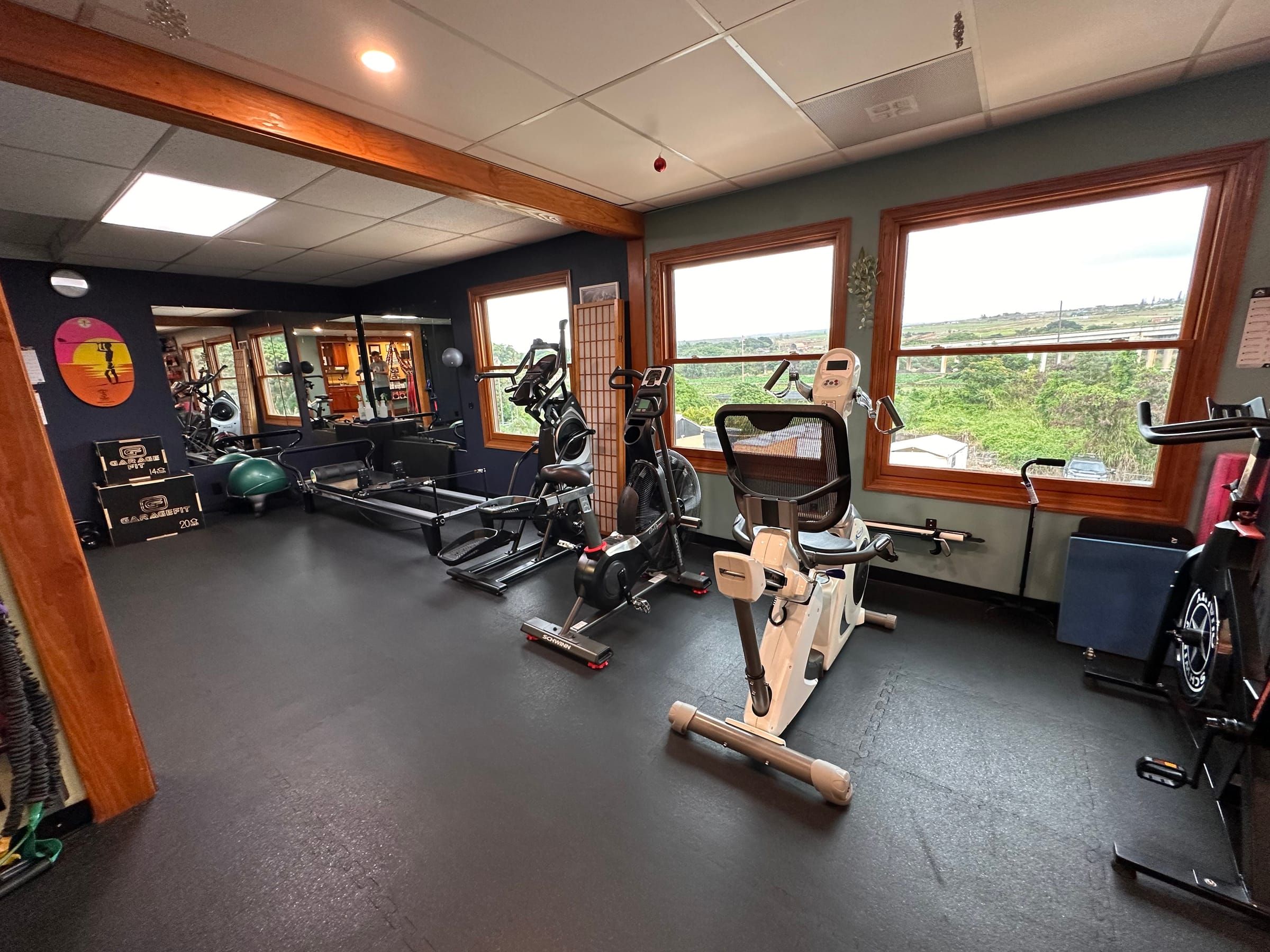
Who this is for
This program is for anyone recovering from an injury — a sprain, a strain, overuse that crept up on you, a fall, a tweak that just won’t settle down — or rehabbing after orthopedic surgery, whether that’s a knee, shoulder, hip or spine procedure. If something’s healing and you need to get your strength, motion and confidence back, this is where you start.
What usually goes wrong
- Stiffness sets in around the area that’s been hurt or immobilized, and it doesn’t resolve on its own.
- Weakness follows, especially in the muscles that support the joint or area you injured.
- Lost range of motion makes everyday movements — reaching, squatting, climbing stairs — harder than they should be.
- Compensating for the injured side changes how you move elsewhere, which can create new problems.
- Fear of re-injury keeps people moving cautiously long after they’re cleared to do more, and not knowing what’s actually safe makes that worse.
How we work
We start with a hands-on evaluation to see how you’re moving, where you’re weak or stiff, and what’s actually holding you back. Treatment blends manual therapy with progressive exercise — building load and difficulty as you’re ready for it — and a home program to keep things moving between visits.
If you’re coming to us after surgery, we work from your surgeon’s protocol and post-op precautions, building your program around the restrictions and milestones they’ve set.
What a plan looks like
Plans generally move through phases: protect the area while it heals, restore motion, rebuild strength, then return to your life and sport. How long each phase takes and how often you’ll come in depends on the injury or procedure.
Insurance
After surgery, most insurance plans want an order from your surgeon before they’ll cover PT. HMSA, for example, requires an order from an MD, PA or APRN. See Insurance & pricing for what your plan may ask for, and we’ll help you sort out what you need.
When to call your surgeon or doctor first
Some things need your surgeon or doctor before they need PT. Call them, or get to an ER, if you have:
- Fever or chills
- An incision that’s increasingly red, warm, swollen or draining
- Calf pain, swelling or tenderness, which can be a sign of a blood clot
- Chest pain or shortness of breath — call 911
- Sudden, severe pain that’s different from your expected recovery
- New numbness or weakness
When to book
Once your surgeon has cleared you to start physical therapy, get on the schedule.
Healing is a process, not an event. Book an evaluation and let’s get you moving again.